
The University at Buffalo's commitment to environmental conservation continues to lead administrators toward progressive programs aimed at waste and energy management.
According to Walter Simpson, energy officer of UB Green, these programs have served as a benchmark for universities and institutions in New York State, and as far away as Australia.
Simpson is also co-founder and chair of the Western New York Energy Conservation Committee. He spoke last week in Clemens Hall in front of the Service Excellence Committee, an assemblage of upper level UB administration, to report on recent progress made by UB Green and University Facilities.
"Our goal is minimizing the environmental impact of the way we do business every day," said Simpson. "People at other universities recognize that UB is innovative, but it's a secret at UB. Many universities are where we were 10 to 20 years ago."
High-profile news sources like CNN and The New York Times have recognized environmental achievements at UB, according to a report from the UB Environmental Task Force.
There are 20 environmental conservation policies at UB, most of which were reviewed at the conference. In addition to reducing UB's "environmental footprint," the programs are also saving about $9 million annually, based on a 1996 study.
Simpson said these savings are beneficial all around.
"There is certainly something here for the taxpayer," said Simpson.
The program is dependent on the cooperation of campus facilities such as the School of Architecture, Procurement Services, CIT, FSA, as well as Residence Halls and Apartments. According to Simpson, UB facilities have shown a 100 percent commitment, and this unanimous support makes UB Green's program unique.
The university's progress has caught the attention of other institutions.
Recently published guidelines for constructing environmentally sustainable buildings have been requested by various other universities and developing institutions throughout the nation, Simpson said.
Michael Dupre, associate vice president of University Facilities, said the new Alfiero building on North Campus was designed prior to the new building guidelines, although the guidelines will influence future building designs at UB and other SUNY campuses.
Procurement services have made efforts to purchase environmentally friendly products to cut down on UB's 3,600 tons of solid waste per year. Currently 35 percent of the solid waste is recycled; however, According to Simpson, the goal is 50 percent or higher.
Other programs include CIT's quick adaptation to Envirographic 100 paper, which is 100 percent post-consumer - meaning recycled - and costs 30 cents extra per ream. The Envirographic paper accounts for half the paper currently used at UB. CIT has also implemented an energy saving program for computers, Simpson said.
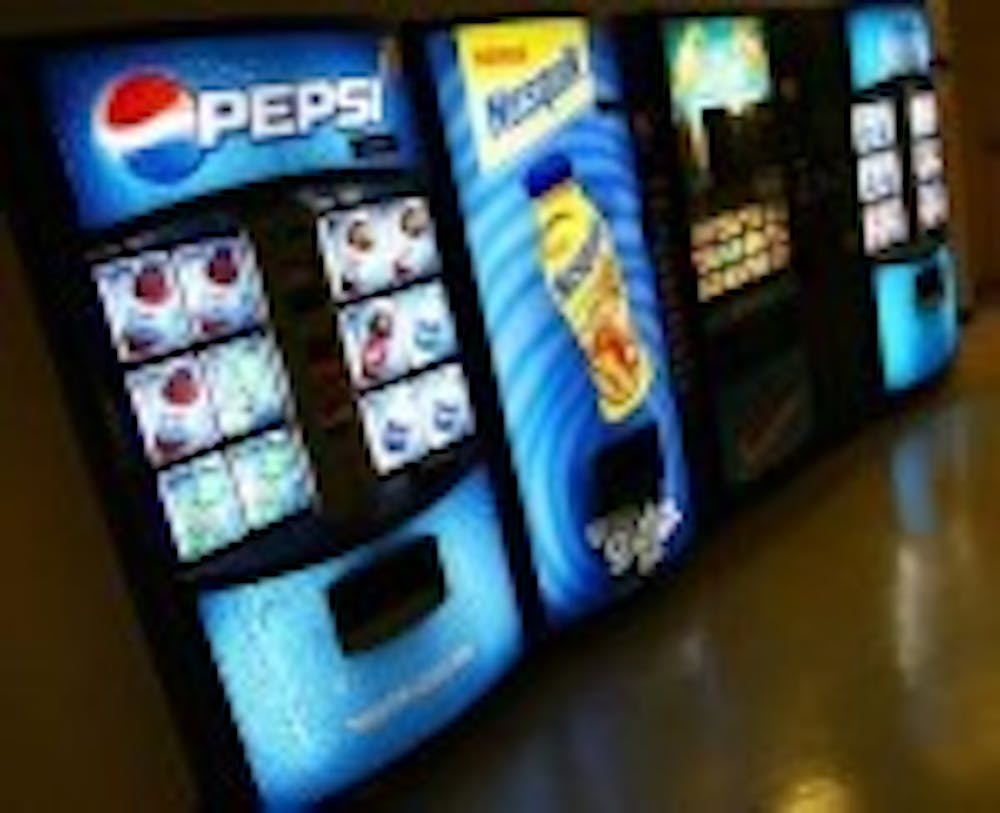
This year, the FSA has installed new Energy Star vending machines that, according to Simpson, are 20 percent more efficient than conventional machines and save $50,000 a year in electricity costs.
On South Campus, the McKay steam power plant, which is over 70 years old, was renovated in 2004, replacing coal burners with energy efficient gas boilers. The project cost about $11.9 million, and will result in 20 percent energy use reduction and about $1.2 million per year in savings.
"For every person on South Campus," said Simpson, "we were burning about 1 ton of coal per year."
Programs also include alternative-fueled vehicles, with 32 Compressed Natural Gas (CNG) pickup trucks and vans in the UB fleet; and alternative wind energy purchasing that accounts for six percent of UB energy consumption.
According to Simpson, UB is the largest purchaser of green power in WNY.
Simpson said that public relations and image building are some of the most important aspects for the environmental conservation effort.
"The more recognition we get, the more we can do," said Simpson.
The UB Green Web site has been instrumental in providing public access to interested individuals and institutions, and receives about 10,000 visits a month, 5,000 from off campus, Simpson said.
Erin Cala, environmental educator for UB, says that her goal is to implement an Eco-literacy course requirement at UB. The requirement would be similar to UB 101, and would be focused on raising environmental consciousness among students. Such requirements currently exist at Middlebury College in Vermont, and UC Santa Cruz.
Freshman English major Maura Pellettieri said that it would be a good idea.
"People in this country live so extravagantly," she said, "when you consider the amount of people on this campus, there is a lot of power in (that idea)."
Not everyone was bowled over by the idea of an eco-literacy course.
Melissa Meyer, a senior English major, said she didn't like the idea.
"It doesn't apply to the academic development of many departments," said Meyer.
Cala said it is hard to get students' attention, but she's trying to let people know that everyone can make a difference. She encourages students to download the "Do it in the Dark" file from the UB Green Web site as it's something that will help them live a more environmentally conscious life from day to day.
Simpson admitted that the policies were not all implemented, but said he is pleased with the starting point.
"I look around and I still see opportunities everywhere," he said.
"We are still consuming an enormous amount of resources. We are still a waste machine."



