
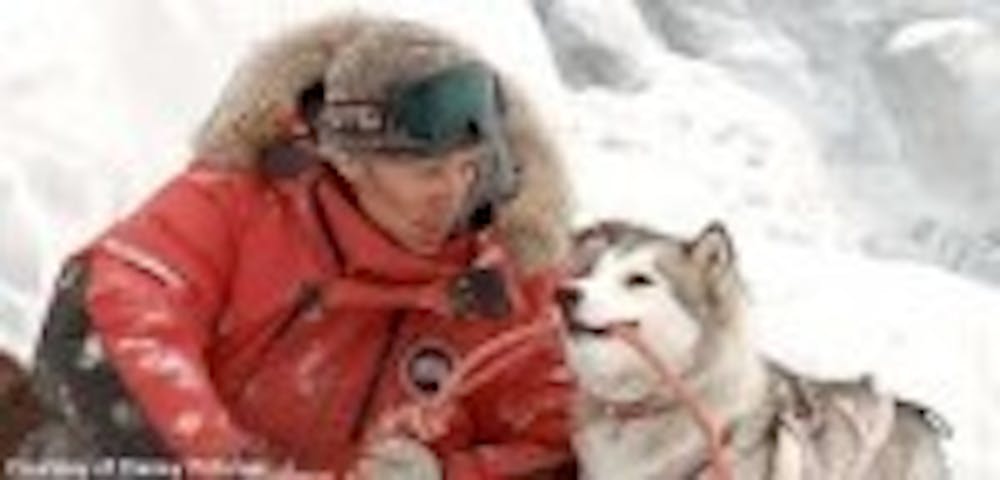
Not since the "Lion King" has Disney captivated its audience with a tale of friendship, survival and a story that is simply inspirational.
Longtime movie producer and director Frank Marshall ("Arachnophobia," "Congo") offers a film for all ages with the live-action film "Eight Below," a moving tale of a dogsled team's survival in the harsh wilderness of Antarctica.
Barely escaping the grasp of a bitter cold storm, Gerry Shepherd (Paul Walker), and his team are forced to evacuate their station. With the plane filled to capacity, they reluctantly leave their eight sled dogs behind in hopes of returning to rescue them before the storm comes full force.
Walker normally plays a hard-nosed, pretentious high school student or an undercover cop that says "bro" a hundred times in 90 minutes. His character in "Eight Below" seems to be a departure from his average role such as in "Joy Ride" and "The Fast and the Furious."
In the early parts of the movie, the bond between Walker and the dogs is highly emphasized, almost to the point of redundancy. Perhaps they were trying to compensate for the fact that Walker lacked the ability to convey genuine emotion.
Jason Biggs ("American Wedding," "Jersey Girl") plays Walker's friend, a man that seems to have had one too many cups of coffee. Unfortunately, they shafted him on the script, as he has some terribly corny lines.
It's the non-human actors that carry the movie, not because Biggs and Walker are terrible actors, which they are, but because the dogs are truly superb. The performance put on by the huskies is astounding and they steal the show from the first minute.
Marshall convincingly depicts the dogs' dependence on one another and their struggle for survival approximately six months in an Antarctic winter, bombarded by storms that were categorized in the movie as the worst in 25 years. It is amazing and almost unbelievable to think that the huskies can act as if the saga is really happening.
The director captures all the interactions between them, their subtle cries, their barks of agony and love, in an almost documentary-like fashion. By shooting the film this way, it brings the huskies' predicament front and center. The direction of the film creates an uncanny bridge from the dogs to the audience.
Despite Walker's pitiful performance in the first three-quarters of the film, he finally shows why Disney paid him the big bucks to be in the movie. The end has Disney clich?(c) written all over it, but Marshall's ability to spellbind the audience as he follows these dogs on their uphill battle to last the frigid winter is what beautifully solidifies the final moments.
Walker must have saved all his talent for this scene, because the final moments of the movie will have every child, teen, parent, and grandparent reaching for tissues instead of popcorn. The dogs overshadow the film's flaws to tell a compelling story that makes for a highly enjoyable family film.



