
Everything that was expected to happen on Tuesday did. Chris Christie won for reelection handily in New Jersey; Terry McAuliffe edged off Kenneth Cuccinelli II narrowly in Virginia; and, for the first time in 20 years, a Democrat will be the mayor of New York City with Bill de Blasio's landslide electoral victory.
So what does this all mean?
Regardless of how premature it is for commentators and strategists to speculate on the 2016 presidential elections this early, we all do it. What everyone wants to know now is what Christie's victory and Cuccinelli's loss mean for the Republican Party, which has been struggling to define its identity and shape its image.
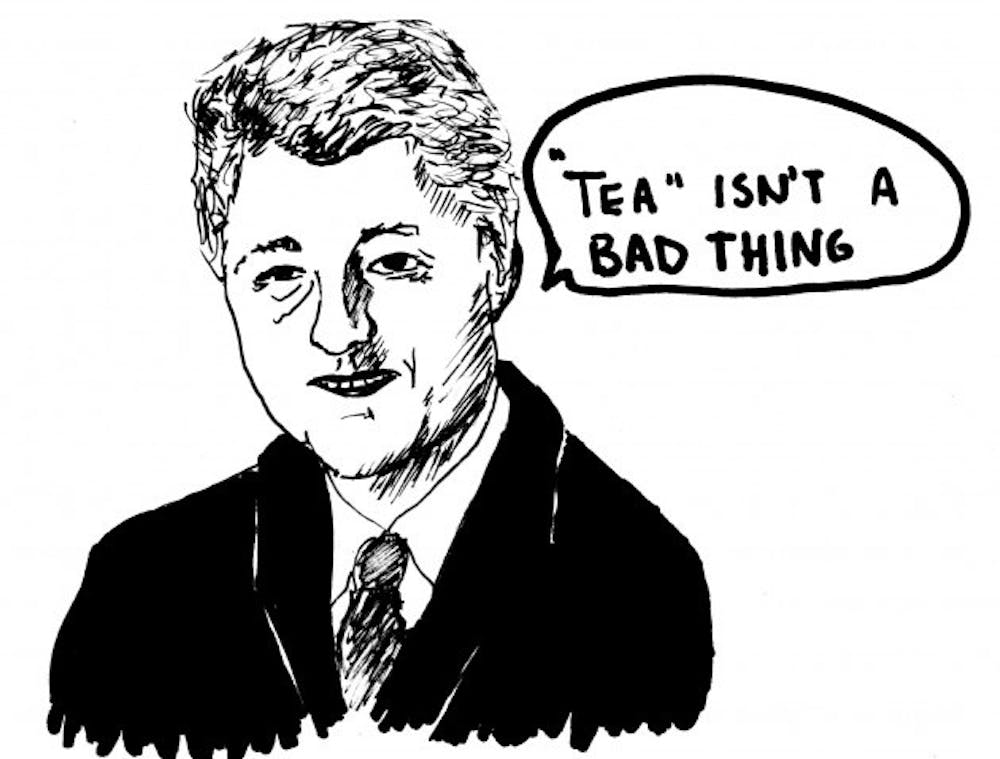
"If we become ideological, then we're blind to evidence," explained former President Bill Clinton to a crowd of McAuliffe supporters last week. Coming from Clinton, who, in recent years, has become something of a professor in political science, this message resonates.
The brand of Tea Party politics that caused the federal government shutdown has exasperated the American public. With 49 percent of Americans holding a negative viewpoint of the Tea Party, according to the Pew Research Center, it is fair to say that its leverage in American politics is diminishing.
Cuccinelli, a Tea Party hero, lost despite the president's health care law being largely unpopular in his state. Fifty-three percent of Virginians opposed the law, according to Politico. But with no financial backing from the Republican establishment (he was outspent by nearly $15 million) and with outdated views on contraception and his equating immigration policy to pest control, he failed to capture the electorate.
Not to mention, Democrats highlighted his opposition to abortion rights throughout the race. After seeing the dangers in Texas of electing rigidly anti-abortion governors, Virginians didn't want to risk seeing that happen in their state.
Twenty-five percent of Virginia voters said abortion was their top priority in the election, according to Fox News, and, with them, McAulliffe had a large advantage.
What hurt Cuccinelli even more was that almost half of the state was affected by the shutdown - nearly 45 percent, according to The New York Times. And, of course, the blame for that impasse falls on Republican extremists like Cuccinelli.
While Virginia is widely noted for being emblematic of the national political landscape, signs of Tea Party disintegration were evident elsewhere - in red states like Alabama where moderate Republican Bradley Byrne defeated Tea Party-backed Dean Young in a primary congressional election.
Voters are fed up with the extreme right - they want politics of pragmatism over gridlock and unity over division. Christie's victory in New Jersey and talk of him as the Republican Party front-runner for 2016 symbolizes the need for a new direction.
A common notion that has been emerging from conservatives is the need to nominate a "true conservative" - they feel they sold out going with moderates in 2008 and 2012, and that in order to win back the independent vote they need to fully embrace their political ideology.
It is well established politically that through a presidential election candidates must appeal to their base in the primary before moving to the center in the general election to win the independent vote.
But for Republicans this trend has not been working. As much as the base wants to blame their candidates' centrism, it is hardly why Republicans have failed to gain the presidency.
In 2008, it was hard to have any presidential candidate win when, after an economic collapse, John McCain admitted the economy was not "his forte." And in 2012, they had a candidate who failed to resonate with voters; Mitt Romney appeared phony and artificial.
People elect presidents as individuals - who they are and what they represent. Christie's being the Republican front-runner at this point hints at something the party needs to desperately realize: that the American people are tired of Tea Party Republicans alienating voters.
Americans want cohesion - a sense of community that comes from our diversity. And with that, we want Democratic and Republican lawmakers who can come together and compromise on issues and solve problems.
What the rest of the country realizes that the Tea Party ironically doesn't is that the framers of the Constitution were deliberate in making the first word of that document: We.
email: editorial@ubspectrum.com
 Photo: The Spectrum Archives


