
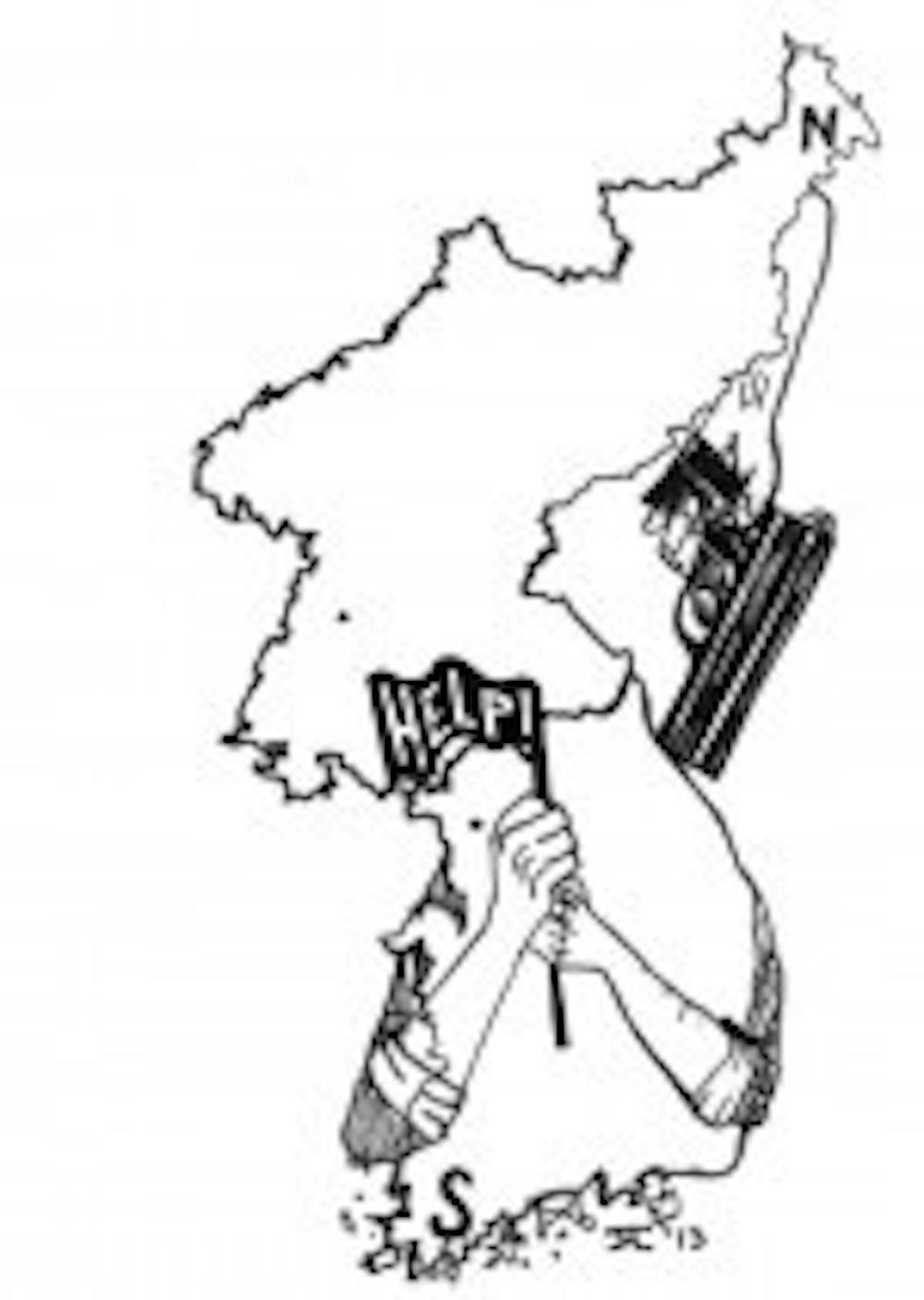
The Pentagon issued on Thursday, for its first time, intelligence that deemed North Korea's nuclear capability has reached a new and higher level. It believes North Korea has established how to develop a nuclear weapon that can be delivered by a ballistic missile.
The Supreme Leader of North Korea, King Jong-un, announced on Tuesday that he advised South Koreans to vacate their country, as the peninsula was going to be on the verge of entering a nuclear war.
For many, this was not a surprise at all and much of the world has previously adopted the attitude of, "What else is new?"
What had developed was a pattern - a pattern of North Korea crying Armageddon until someone swoops in to intervene and help facilitate a compromise.
A problem for Kim is that nobody is taking him seriously anymore, resulting in his beginning to lose leverage. The Obama administration has made it clear it believes he has been blustering more than really contemplating action. The administration previously released a statement saying it saw no evidence that North Korea was mobilizing military action, according to The New York Times.
Well, now there has been a new level of aggression to emerge out of North Korea that our intelligence has unveiled. We already knew that it has conducted three nuclear tests and has fired a ballistic missile that reached the Philippines. The question now is: Are these recent signs precarious and a cause for serious concern?
Former Defense Secretary Robert M. Gates predicted two years ago that North Korea held the potential to advance its capabilities within a few years.
It seems for the last 10 years or so we have been repeatedly told to be scared of North Korea and that they have now evolved into some version of the boy who cried wolf.
We don't want to see the United States engage in any type of interventionist foreign policy that is not necessary - but we also don't want to dismiss a country's threats as hyperbole if the potential for destruction is real.
The president has made it clear he has no desire to engage in any type of military intervention that is not necessary and was quick to point out the strong "disconnect" from Kim's "rhetoric and action."
Our foreign policy has been consistently to try and ease any tensions as diplomatically as possible - which is exactly what our foreign policy should be at this time. It is important to recognize these issues with North Korea are usually ephemeral and tangential, though we believe this extended period of progression is becoming more ominous.
Recently, James R. Clapper, director of National Intelligence, told the House Intelligence Committee, "North Korea has already demonstrated capabilities that threaten the United States and security environment in East Asia."
Many have pointed to the history of this type of rhetoric from Kim's father and grandfather, which would often prove as intended to obtain aid in the form of money, equipment, food, etc., in order to simmer down.
The problem may be that Kim is enough of an Icarus figure to want to really exceed his father and his father's father. He may want to go beyond these mere tactical maneuvers. The danger is that damage could incur before he falls to his plank - his own self-destruction.
We are not suggesting that Kim's rhetoric is not intended for an audience, both internal and external, with the hopes of achieving some concrete goal. It certainly is, but the development of nuclear capabilities is a legitimate cause for the United States to consider them a risk.
Clapper has said he believes his "primary objective is to ... affirm his power." That he wants to earn the respect that comes with being a nuclear power. The issue most prevalent is that he has differed from his father who would just provoke then back away.
Kim has been consistently making strides to further his nation's nuclear capacity. He is not backing down so easily.
As Kim has been drawing distinctions between him and his father in how he governs the country, we should remain privy to these changes in patterns and should maintain close surveillance.
What is most important is to remain strategic in trying to subdue Kim without letting any aggression come to fruition. As Sun Tzu asserted, "The greatest victory is that which requires no battle."
But we should always be prepared for the worst-case scenario.
Email: editorial@ubspectrum.com
 Photo: The Spectrum Archives


