
Over the last few days, students all around campus have been buzzing, but the university has remained quite quiet on a situation that deserves many words.
While students were receiving UB Alerts to their phones Sunday night, Richmond Quadrangle residents in the Ellicott Complex were being evacuated from their rooms due to a carbon monoxide leak. The leak was caused by a boiler leak on the ground floor when a piece of the boiler shifted and didn't allow the exhaust gas to properly ventilate from the building.
Since then, inspections have allegedly shown there are no longer any traces of carbon monoxide in the building, the problem has been fixed and all affected students have returned to class. But just a few days ago, two students drove themselves to Urgent Care, three were taken to the hospital and five other students were evaluated by an ambulance crew on-scene.
Students initially (i.e. for the first few days) received little information on what was going on, having to seek out news rather than being told any concrete information or plan from the university. This is completely, 100 percent the school's responsibility, and UB underestimates how much - despite its apathy in other regards - students care about being in the know, especially when it's something as important as health and safety.
On Tuesday, Amanda Costantino, the director of Campus Living, told The Spectrum that representatives from Campus Living, Environmental Health and Safety and University Facilities would make sure the entire university is aware of the situation and would collectively determine the school's long-term decisions.
It's good to see the school following up on that. By Amanda's Law, carbon monoxide detectors are only required on a floor where there is a carbon monoxide source.
The problem in UB's case is Richmond's two ground floor detectors were - for unknown reasons - missing.
Vice President for University Communications Joseph Brennan said UB passed its annual fire control and prevention inspection in October, but after being told we would receive documentation on Wednesday, both The Spectrum and the university still have no evidence of this being the case. Instead, UB was verbally told it passed inspection in October, according to Director of Environment, Health & Safety (EH&S) Joseph Raab.
But despite that hiccup, the missing detectors have been replaced by wall-mounted battery-operated versions and some additional detectors have been added on the third, fourth and fifth floors of Richmond and in all residence halls. Environment, Health & Safety will also perform weekly inspections of all detectors to make sure they don't randomly go missing again.
The problem doesn't lie in action, though; the problem lies in communication.
It has been five days since the carbon monoxide leak in Richmond, and UB's outreach to the victims and the student body as a whole has been all but non-existent, even as the victims have made it known they are looking for just that.
Brennan, though, says that is not necessary. To him and the university, anything found in the UB Reporter - which outlines the details of the incident and what the school is doing about it - is enough.
To the rest of us, it's hardly the bare minimum.
Granted, Student Affairs emailed the victims to schedule meetings with them and help them move forward with the incident. But that's standard procedure through Student Affairs, and Bennett Sciacca - one of the victims, who, while his roommates went to Urgent Care, was sleeping - even believes that's more about saving face. It's hard to disagree with him at this point.
UB puts so much time and money into not just making sure the school's reputation stays in tact but also building it up and improving it on a large scale. But while all this is happening, it can't even take care of the kids living on campus or give its students the bare necessities - health, safety and comfort.
Here's an important question: who is going to pay the health bills of the victims who went to the hospital? According to Sciacca, UB has not reached out to him on the concern-worthy issue and also didn't check to see if he and his roommates had a way of getting back from the hospital.
Is that how we treat our students - leaving them to fend for themselves after the school makes a mistake? That is a situation that needs to be rectified. Brennan said UB might compensate the victims' bills. Might. It, of course, depends on procedure and submitted forms, so until then, we have nothing but ambiguity. There should be absolutely no reason the victims should have to take care of these health bills in this situation.
We hope UB is recognizing the seriousness of the situation because, currently, it doesn't feel like it. It feels more like the school is trying to play it off like it wasn't that bad.
Carbon monoxide poisoning is serious enough, though, without the lack of communication. Considering the gas has no taste, color or smell, it can be breathed in over a long period of time without noticing and can cause long-term damage. In many cases, the symptoms will wear off within a few days, but up to 40 percent of those poisoned can suffer health problems ranging from memory loss, impairment, behavioral changes and cognitive process in the long-term. Some can even be permanent.
This is something UB has to be on top of all the time because anything can change in a minute, as Sunday night proved.
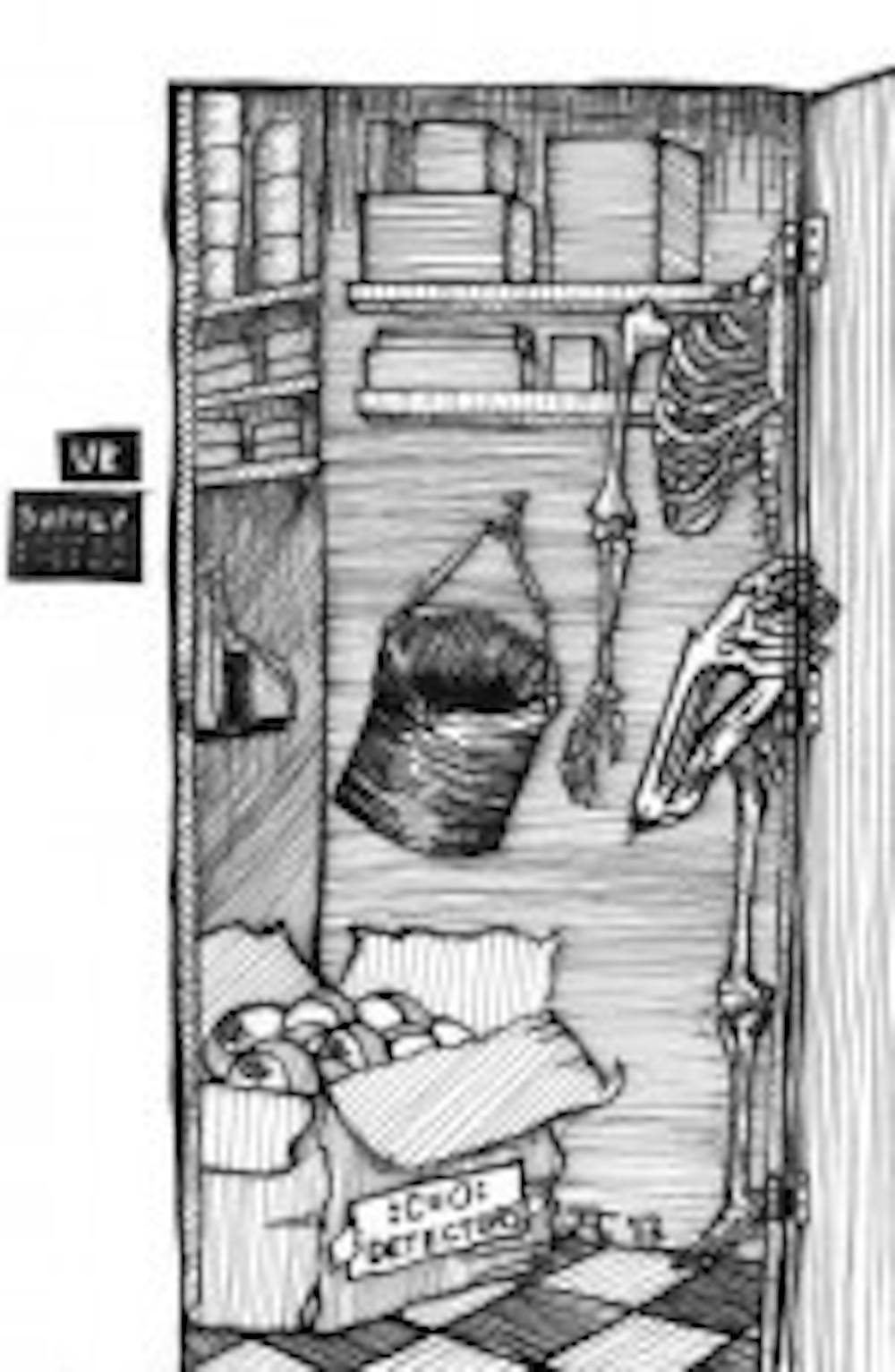
Situations like this make us wonder what else could be going on at the university that is not being checked up on. What other skeletons could possibly be in the school's closet?
UB got so lucky in this situation, and those in charge of putting the school in a good light should be thanking the heavens every day. The students who got sick did everything they should have and could have done: they went to Urgent Care first to check to see if they were all right or got themselves into medical care, and they all avoided a major catastrophe.
Did UB do nothing? No. But did it go above and beyond what it should have done? Absolutely not. No one has acknowledged students could have died, which is the most important part of this whole ordeal. It's a very real, serious and scary situation that is only being addressed with procedures and formalities.
Email: editorial@ubspectrum.com
 Photo: The Spectrum Archives


