
Zinab, a crinkly-faced Afghani woman, dares to speak up about women's rights. Her meager list of complaints could easily make the most indignant American feminazi blush.
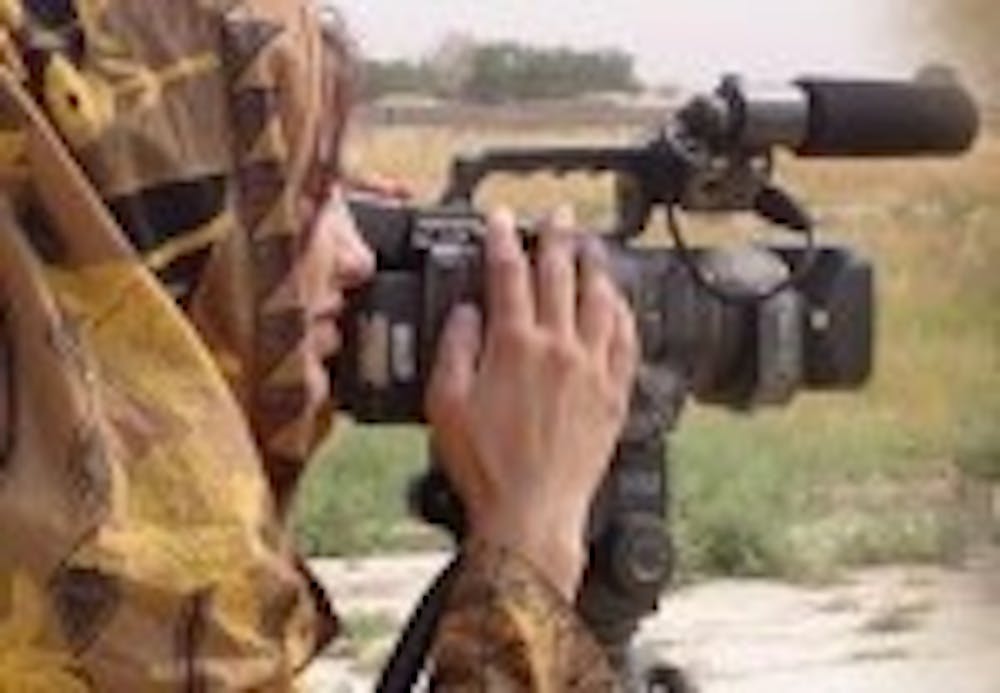
"Afghanistan Unveiled," a documentary filmed by Brigitte Brault and the Aina Women Filming Group, explores the effects of the Taliban's repressive role. The first team of women video journalists trained in Afghanistan recorded the decimated lives of Hazara women.
Forced to take refuge from the Taliban, batches of women and children take refuge in the barren caves of Bamiyan. It is here that they compile a list of ailments.
These women want the right to their dead husbands' bodies, they want the right to running water and the right to food, shelter and heat. They hardly seem to be asking enough.
Zinab reveals her leg to the camera and begins to pinch at it, "I'd like to get a little fatter," she says.
It's difficult to avoid feeling overwhelmed by the "cutty" and impulsive nature of this film. The swarming testimony and scratchy audio muffle any attempt of steady narration or character development.
Yet, this style is effective in that it forces the audience to retrieve a harmonized message from the overlapping babble.
Despite the uneven footage and the colliding voices, one distinct message is heard: the women of Afghanistan are ready to stop suffering.
The journalists also make a stop in Badakshan where they observe the deeply contrasting lives of men and women; the men in their source of income and recreation in poppy cultivation, while the women remain behind closed doors bearing the weight of the chadri (burqua).
The women's acquiescence to confinement is either a decision made out of respect for culture or out of fear. Considering the likelihood of breast amputation in return for disobedience, these women are mainly held captive by fear.
"The Taliban came to us like a plague," Zinab said. "They put a black mark on history."
The most devastating aspect of Zinab's statement is that the presence of the Taliban cannot yet be considered "historical."
The other film presented, "Madanm Ti Zo" by David Belle, intimately follows the life of Mrs. Littlebones, a Haitian midwife/medicine woman.
The vit-style cinematography brings you so close to Mrs. Littlebones you may begin to smell the puddles of afterbirth.
Unlike the interrogative role of the cameras in "Afghanistan Unveiled," "Madanm Ti Zo" demonstrates the observational operation of film, with minimal cuts and a plentitude of real-time.
Sarah Elder, professor of media studies at UB who hosted the event, described the intention of this style.
"It's supposed to make the viewer feel as though they're a fly on the wall," she said.
Although the leisurely pace of the camera can become boring, shots of the sassy old granny rough-handling babies seems to breathe life back into the film.
"They call me Never Tired," Mrs. Littlebones says.
In spite of outdated medicinal practices, Mrs. Littlebones' pointed tongue brings with it the modernity of wit.
The last scene shows her sloppily stomping around to the beat of a worn-out radio, pressing it against her face like a lover. This image demonstrates Mrs. Littlebones' ability to sprinkle good humor throughout a community ridden with poverty and death.
"Panther in Africa," and "aka Mrs. George Gilbert" will be shown on Oct. 6 at 6:30 p.m. in the CFA Screening Room. Both films attempt to resonate a theme of radical politics and the natural occurrence of validation in retrospect.



