
Forget for a second where UB will find the money to build a new rec center. Never mind how it will pay for more student housing. These days, it's getting a lot more expensive just to keep UB running from the ground up.
While anyone with a car takes a direct hit as gas prices flirt with the $3 per gallon mark, students will be taking an indirect hit as rising fuel costs, aggravated by Hurricane Katrina, impact both campuses, and higher costs will mean higher fees and higher tuition.
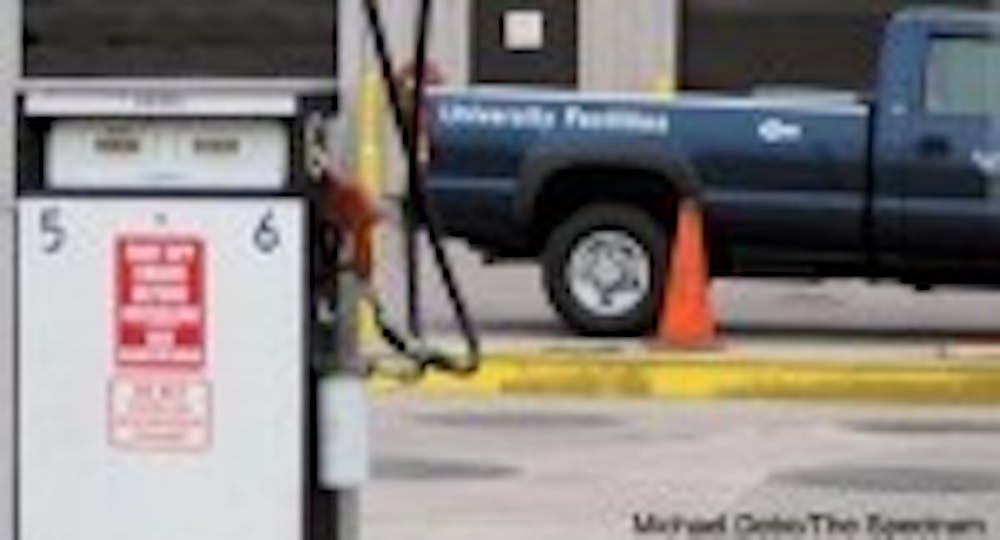
Simply to keep campus vehicles moving it will cost UB approximately $100,000 more than last year, according to John Hayes, assistant director of buildings and grounds. That includes fuel for everything from grounds keeping vehicles and lawnmowers to snowplows and buses.
"While we've seen costs go up, so far it hasn't trickled down to commodities," Hayes said. "But we expect that's going to happen."
One reason operation costs have increased is because shipping costs are on the rise as companies start to add fuel surcharges.
"We can pay three dollars at the pump and complain about it, but the UBs and organizations of the world are experiencing these increases over and over again," Hayes said.
UB is a $50-million-per-year organization in terms of what it spends to operate, according to Louis Schmitt, director of Facilities Operations. That price includes utilities, operational staff and money spent on commodities which range from the two tractor-trailer loads of paper that roll onto campus each month, to environmentally friendly cleaners with increased regulatory costs.
UB spends $60,000 per year alone in light bulbs to light its campuses.
In addition, UB purchases 120,000 gallons of gasoline per year for use between 350 licensed vehicles, including university police cars, snowplows and lawnmower equipment.
And while UB is dealing with the increased cost of that demand, there are other effects. For example, the university's contract with Hausrath's Landscape Maintenance, the lawn service for South Campus, is up for renewal in April. UB officials expect a hike in fees due to fuel cost increases.
The department of parking and transportation is also dealing with cost increases. Though the UB bus service is provided through Cognisa Transportation Inc. at a flat hourly rate, diesel fuel is purchased through the university to run the buses and shuttles.
Officials say that a state contract with Noco saves money by ordering in mass quantities each year, but fuel costs have increased 58.6 percent, from $1.45 per gallon in Feb. 2004 to the current cost of $2.30 per gallon.
That's an increase of almost $2,000 in net cost to UB per year.
Though the fuel cost increases are affecting drivers at the pump, there has yet to be a change for students who use the buses and pay the transportation fee included within the comprehensive fee.
"There is a process for raising that fee, but no, not at this time," said Christopher Austin, transportation coordinator. "If costs continue to rise, we might need to address that issue and take a look at it."
Schmitt, director of Facilities Operations, said because there's very little we can do to stop the use of fuel, UB needs to control costs in other ways.
Schmitt said greater recycling and vandalism prevention are ways to curb costs. UB loses bewteen $25,000 to $50,000 per year just in restoring vandalised signs.
"When we had simple signs, no one ever bothered with them," he said, but now that UB has a more ellaborate welcome, people are vandalizing the signs with spray paint, or stealing the UB logo as a souvenier to hang in dorm rooms.
According to University Police, no calls or complaints about sign vandalism have been reported.
Schmitt also said that "if we could get people to recycle paper, more money would be saved."
UB saves $25,000 every year through the recycling of paper, but officials said the current recycling rate of 35 percent could reasonably be raised to 50 percent.



