
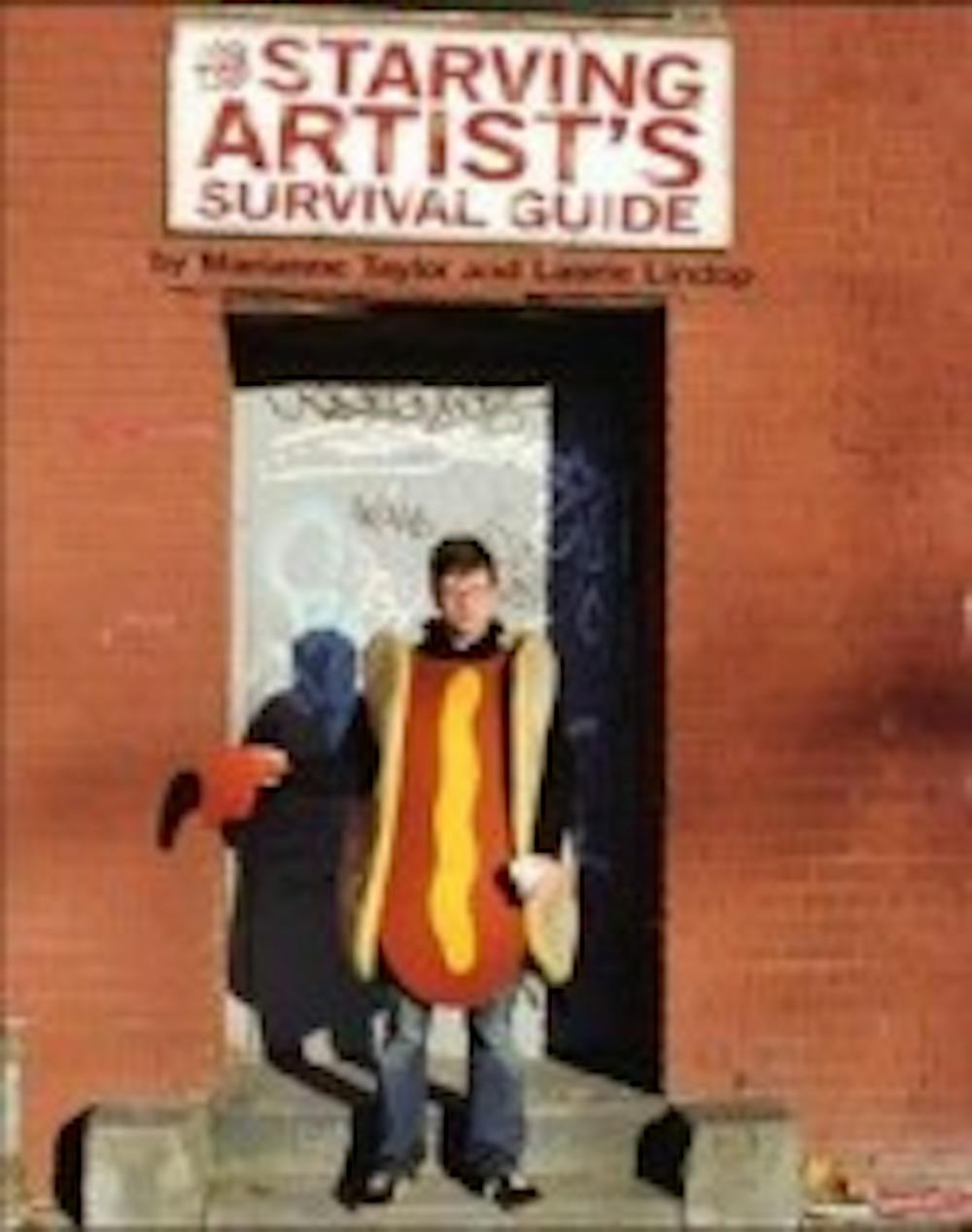
Within the past five years, survival guides have been created for everything under the sun. The "Teenage Guy's Survival Guide," the "SpongeBob SquarePants Survival Guide" and the "Hip Mama Survival Guide" have all graced store bookshelves. Created for the sole purpose of entertaining, these guides make the perfect gag gift.
Now with the assistance of "The Starving Artist's Survival Guide," slackers of all sorts can laugh at their poor and destitute economic status.
Written by Marianne Taylor and Laurie Lindop, the guide offers numerous survival techniques and encourages artists who can't seem to get a break. It begins with a chapter dubbed "Rejection," containing sample rejection letters, potential responses to rejection letters and ways to either accept rejection as structural criticism or simply to wallow in self-pity.
According to the "Starving Artist's Survival Guide" there are five types of rejection letters. They range from the worst type of rejection letter (the "Don't Even Bother" letter) to a much more positive rejection letter (the "Call Your Mama" or "The Big Nirvana" letter).
Recommended arts-and-crafts projects include a cutout project featuring the face of the rejection writer. There are also sample responses to the rejection letter ranging from the "Guilt Invoker" to the more abrasive "To the Assh*** Who Rejected Me" letter.
"Because I so pity you, I can't muster up the bitterness necessary to close one eye...take aim for your heart...and pull the trigger as your rejection letter so accurately did," reads the "Assh***" letter.
Chapter three offers valid advice for anyone who believes that finding a real job is wasting time that could be spent on perfecting their "art." This chapter is called "Day Jobs" and contains useful information of the benefits of contributing to society.
Different jobs range from waiting on tables, to being a stripper, to posing nude. The guide also gives financial advice on using the money earned.
"The artist must resist the temptation to order appetizers and full carafes of sangria," advises the guide. "What you don't need are more snowglobes and Slinkeys; what you do need is to fork over the rent. And if you're freeloading with Mom or long-suffering friends, a contribution of toilet paper, cat food or generic pasta will buy you some time."
Chapter seven offers the artist solutions to dealing with the idea that fame is not in their future. The gruesome chapter "Ending It All," includes reasons to keep on living. If that doesn't seem artistic enough, the chapter also includes "dramatic exits" as a way out of the artists' tragic existence.
Other features include "Ten Good Reasons to Keep Your Head Out of the Oven," with examples of celebrity suicides ranging from the notorious, to the most embarrassing, to the most dramatic exits. They even offer advice in planning an obituary.
The remaining chapters in the "Starving Artist's Survival Guide" include different types of critics, types of places artists tend to live, what artists should look and act like and different types of artist relationships.
These chapters do not offer means for survival as the title implies. Instead they provide humorous facts and examples to which artists can relate. Miscellaneous facts about famous artists ranging from poets to actors, to painters are strewn throughout.
Seeking real depth and solution from a survival guide such as this is never an option. The guide will be of little help to artists, but will provide a few chuckles.



