
Nearly six months ago, two UB students and an instructor filed suit against the U.S. government for an allegedly illegal five-hour detention and racial profiling at the U.S.-Canada border.
Now, as the school year progresses, so does the case.
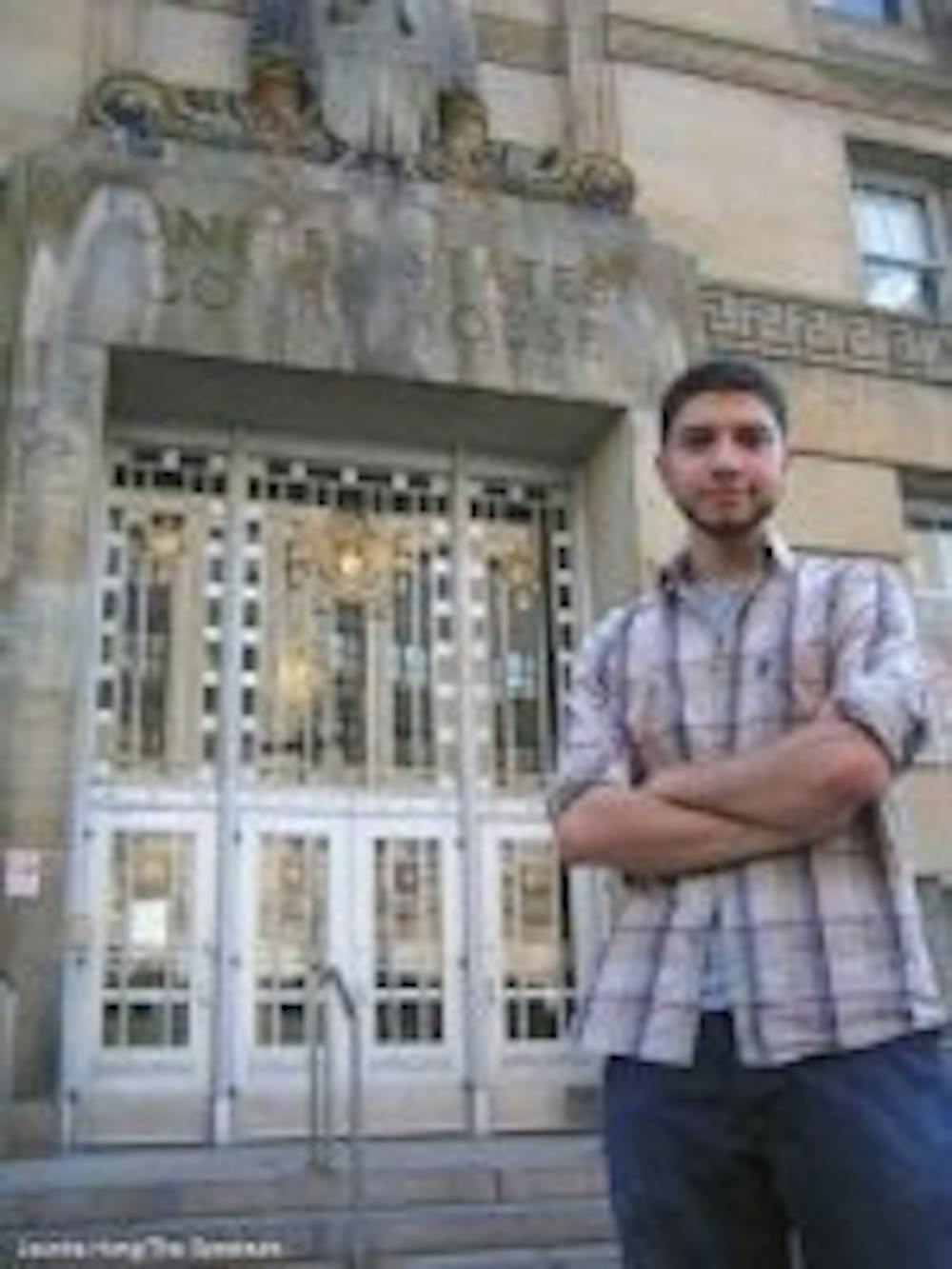
Hassan Shibly, Kerema Atassi and Sawsan Tabbaa are among five Muslim-Americans who filed the federal lawsuit in April, alleging they were wrongfully and illegally detained at the border when returning from an Islamic conference in Toronto in December 2004.
The plaintiffs, all of whom are U.S. citizens and had passports or New York State driver's licenses with them at the time, were detained for about five hours at the Lewiston-Queenston Bridge on Dec. 26 and 27 of last year.
Most recently, the case has been moved from New York City, where the complaint was originally filed, to Buffalo. While it begins to progress in court, Shibly says the purpose of this suit is not for monetary gain but rather to affirm the civil liberties of American citizens.
"What they did was ineffective," said Shibly, a sophomore who is also the chair of the Student Association Assembly. "They obviously knew very little about the Islamic faith, and furthermore, they violated our rights."
According to Udi Ofer, an attorney with the New York Civil Liberties Union who is representing the plaintiffs, U.S. District Court Judge William M. Skretny is presiding over the case.
The question of limiting peoples' rights in the name of national security has been a major point of contention in the wake of Sept. 11 and the Iraq War, and this case has the potential to define the point at which these restrictions stop being necessary and start to tread on the very principles this country was based on, Ofer said.
"This is a really important case because it's about religious liberty for American citizens," Ofer said. "In many ways it's unprecedented that dozens of American citizens were detained based on religious beliefs."
"It's also an example of the government's needless violation of civil liberty in the name of national security," Ofer added. "Our clients did absolutely nothing wrong, yet they were treated like criminals. Violating civil liberties in the name of national security does not make us any safer and certainly does not make us any freer."
According to Ofer, the case is currently in the discovery stage, where the plaintiffs are given the opportunity to interview officials involved in the detention and gather any information relevant to the case.
"The government keeps trying to stop discovery in the case by playing the 'national security' card, saying it's very dangerous for anyone to find information about the detentions and that it might hurt national security," Ofer said. "Judge Skretny has been good, though, saying that's not a good reason for plaintiff to conduct discovery. Discovery is part of the mechanism to find out information that will determine whether you win or lose. Without discovery, your case can go nowhere."
The government has also moved to have the case dismissed, but Judge Skretny has yet to rule on that motion.
As it stands, progress is continuing and the plaintiffs hope to settle the case before the year is over.
"With this case, there is a looming deadline," Ofer said. "Another Islamic conference will happen in December, and there has to be some sort of decision that determines how the U.S. citizens that attend this conference are going to be treated once they come back to Buffalo. It's crucial that there's a judicial order in place that says the U.S. government can't detain, interrogate, photograph or fingerprint citizens based on the fact that they attended a religious conference."
Shibly said that despite last year's border fiasco, he intends on attending this year's conference.
"I'm definitely going to the conference," Shibly said. "By not going, it's almost like letting the other side win. And we're not letting them win, it's too dangerous to let people in power chip away at our rights as citizens."
While progress has been slow so far, Ofer said the NYCLU is confident that the case will go in their favor.
"We feel strongly that the judge in this case will let it proceed and will conclude that First and Fourth Amendment rights of American citizens were violated at Buffalo border last year," Ofer said.
The most important part of this case, win or lose, is to not lose sight of our best interests as American citizens, Shibly said.
"I say look at how all the great democracies fell apart. We don't want to go down that road," Shibly said. "Whether you're looking at Rome or Germany, the government identified a threat and began taking away rights. When people are blinded by fear, they think it's for their own good. However, when you give up liberty for security, you obtain neither in the end."



