
Computer-generated sounds have the distinct ability to alienate the listener and often feel cold. They start to come alive when combined with instrumentation, however.
Wednesday night, music with an accompaniment of processed computer sounds came to the Center for the Arts' intimate Black Box Theatre for a display of creativity with a fusion of mechanical and traditional instrumentation.
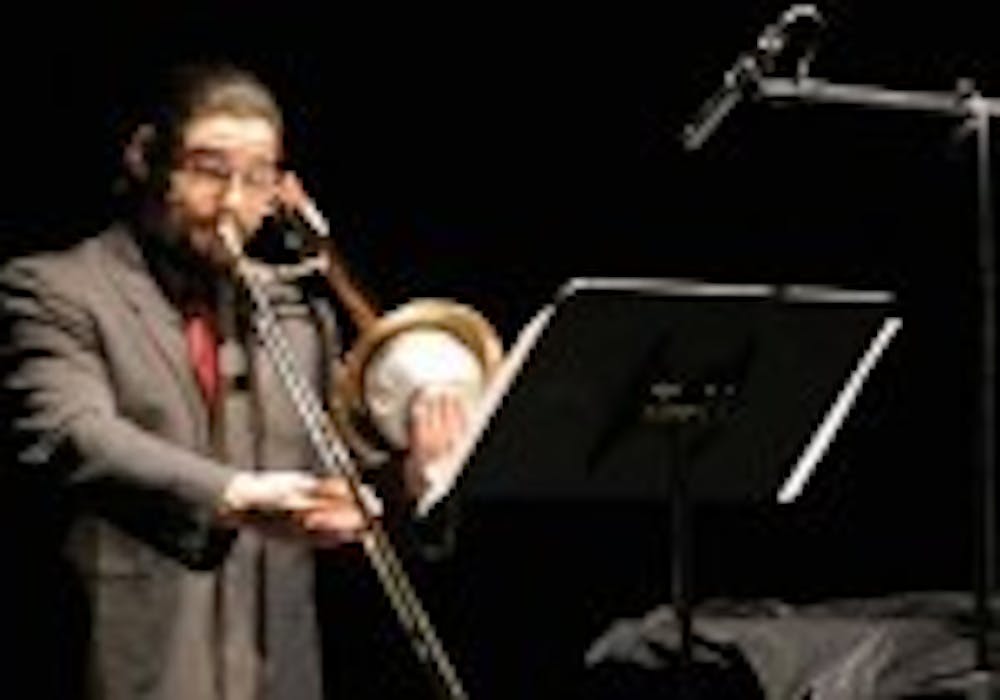
Even though the title of this event was "Computer Music," the musicians used instruments such as the flute, clarinet, and trombone to explore their conceptual underpinnings.
The discord and duality between the creator and his machines are personified in many of the pieces. Numerous works featured dueling sounds, man constantly at odds with machines.
This intriguing relationship was constantly explored in the vast majority of the pieces, which mediate the addition of sounds outside of the musician's own instrumentation.
Derek Charke, the first musician to be featured in this program, played his work "Dwaalicht" from 1995 with stunning authority. His interesting piece was a mixture of the visual arts, spoken word, and flute.
A box, colorful and illuminated, sat at the center of the stage. During the course of the performance, Charke had an unusual relationship with the box, constantly at odds with it. Inside the box were two speakers, playing different tones. He put the tones in a cycle of synching up and falling out of phase. The music started to become more aggressive with an increasing pace and it seemed to work against Charke's efforts to play along with it. The staged battle gave the accompanying machine-generated music a sense of life.
A subsequent piece "Wind...The Internal Journey of My Heart" from 2005, by Ji-hyun Woo, featured Yevgeny Dokshitskiy on clarinet. This piece began as the most accessible of the evening, but quickly became something else.
As the color of the lights shifted during the piece from cool blues to fiery reds, the attitude and tempo of the song changed as well. As the clarinet played melodic tunes, beeps and other miscellaneous sounds were introduced, giving the melody a greater texture. The piece started using non-traditional sounds, such as the key clicks on the clarinet.
Towards the finale of the piece, the mouthpiece of the clarinet was removed, and was played sans mouthpiece for a short, but powerful duration. The visceral quality of the sound, gave a bestial moan, giving a heightened sense of darkness and strength, resounding strongly even after Dokshitskiy left the stage.
Brett Masteller's piece "Feedbaczkowski" from 2005 was a powerful pre-recorded piece, which had its origins in a baritone sax soloist, Steve Baczkowski. His recorded sounds were manipulated during the course of the performance, and the sounds were distorted violently, creating a chilling effect.
The combination of the baritone sax's power with the computer's ability to reinterpret the sounds through various layers of abstraction left an aggressive indication of the computer's ability to alter sounds.
"Computer Music" showed that human creativity is the variable that can give even the coldest of sounds warmth.



